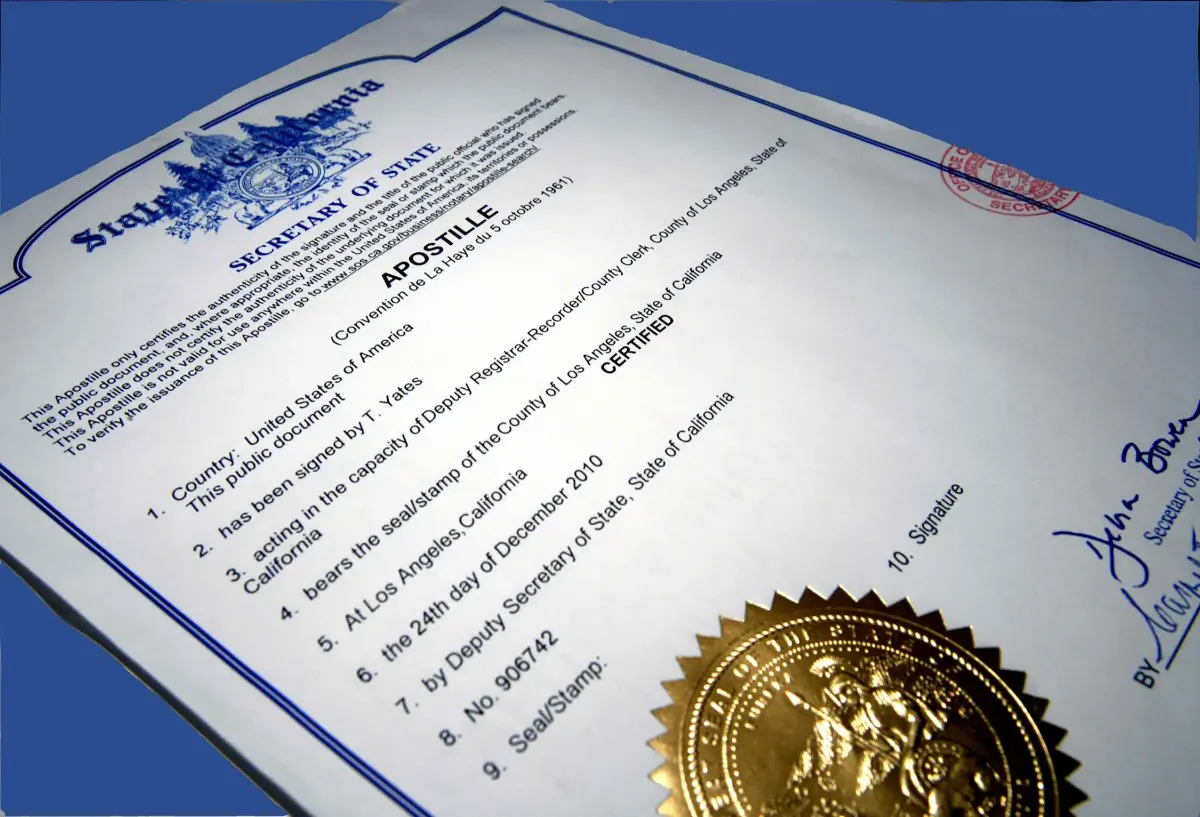
You sent your document to the California Secretary of State, waited, and it came back without an apostille. Now your deadline is closer and you're not sure what went wrong.
A rejected apostille is frustrating, but it's common, and it's almost always fixable. The Secretary of State doesn't judge what your document says. It checks whether the signature and seal on it can be verified. When something doesn't meet its requirements, the whole request comes back. Here are the most common reasons, and what fixing each one usually involves.
1. The notary certificate is wrong or incomplete
This is the most common reason we see. California requires specific notarial wording, and the Secretary of State checks it closely. Problems include:
- The notary's signature doesn't match the signature they have on file with the Secretary of State
- The wrong type of certificate (for example, an acknowledgment when the document needed a jurat, or the other way around)
- Out-of-state certificate wording instead of the California form
- Missing required text, like the boxed notice at the top of a California certificate
- Blank or incorrect fields: the venue, date, signer's name, or the notary's seal not fully legible
- A loose certificate that isn't properly attached or doesn't describe the document it belongs to
The fix: the document usually needs to be notarized again, correctly, before it can be resubmitted.
2. A copy was sent instead of a certified copy
The Secretary of State needs an original or a certified copy from the official who issued the document. A photocopy won't work, and neither does a copy "certified" by a notary. In California, a notary can only certify copies of a power of attorney, not birth certificates, diplomas or court records.
This comes up often with court documents like divorce decrees and name change orders. The copy you received in the mail or downloaded online usually isn't the certified copy the Secretary of State needs.
The fix: order a new certified copy from the issuing office, such as the county recorder, the California Department of Public Health or the court. For court documents, we can retrieve certified copies from the court for you for an additional fee, quoted per request.
3. A birth or death certificate wasn't certified by the county clerk first
Many California birth and death certificates are signed by a local registrar or health officer whose signature the Secretary of State can't verify directly. Those certificates must first be certified by the county clerk in the county where they were issued, or replaced with a certified copy the Secretary of State can verify.
The fix: get the county clerk certification, or the right certified copy, before the request goes back to Sacramento.
4. The certified copy is too old
A certified copy that was issued years ago can be rejected, even though it's genuine. As a rule of thumb, certified copies issued within the last five years avoid delays.
The fix: order a fresh certified copy.
5. The document wasn't issued in California
The California Secretary of State can only apostille documents issued or notarized in California:
- A document from another state has to go to that state's Secretary of State.
- Federal documents, like an FBI background check, go to the U.S. Department of State, not California.
The fix: send it to the right office, or, for some documents, have a California-notarized affidavit or declaration prepared that can be apostilled here.
6. University diplomas and transcripts weren't notarized the right way
A diploma or transcript can't simply be photocopied and notarized. It usually has to be notarized through the school's Registrar's Office, and each university has its own process and timing. See our SDSU international students guide for how this works at SDSU.
7. The request itself was missing something
Missing fees, a missing request form, or no destination country listed can also send the documents back. These are the easiest to fix, but they still cost you the round trip by mail.
Documents we commonly apostille
Every document type has its own requirements, and that's where most rejections start. These are the documents we handle most often:
Court documents
- Divorce decrees (judgments of dissolution)
- Court-ordered name changes
- Child custody and support orders
- Adoption decrees
- Probate documents, like letters testamentary
- Other certified court judgments and orders
Vital records
- Birth certificates
- Marriage certificates
- Death certificates
Sworn statements and personal documents
- Affidavits of single status (for getting married abroad)
- Affidavits of no name change
- Powers of attorney
- Minor travel consent letters
- Translator's affidavits
Education documents
- University diplomas
- Official transcripts
Business documents
- Corporate documents, like articles of incorporation and certificates of good standing
- Contracts, resolutions and other notarized business documents
Not sure if your document can be apostilled, or what version you need? Call us before you order anything. That one conversation often prevents a rejection.
What to do after a rejection
- Don't just mail it back. If the underlying problem isn't fixed, it will be rejected again.
- Read the rejection letter carefully. It usually says which requirement wasn't met, though not always how to fix it.
- Count your time. Every rejection adds another round of processing and mailing. If you're working against a travel date, a visa appointment or a job start, a second rejection can be costly.
Let us fix it for you
Apostilles are one of our core services. When a request has been rejected, we:
- Review the document and the rejection to find exactly what went wrong
- Re-notarize it correctly with the proper California certificate, at your home, office or anywhere in San Diego County, 24/7
- Retrieve certified copies of court documents, like divorce decrees and name change orders, for an additional fee, quoted per request.
- Arrange the county clerk certification or a new certified copy when that's what's needed
- Submit it to the Secretary of State and get the apostille back to you, or ship it overseas
Most rejections come down to one small detail. We catch those details before submission, so it's done right the second time. See our San Diego apostille service, and if you're not sure whether your country needs an apostille or an authentication, read Apostille vs. Authentication.
This article is general information, not legal advice. Secretary of State requirements can change, so confirm current rules before you submit.