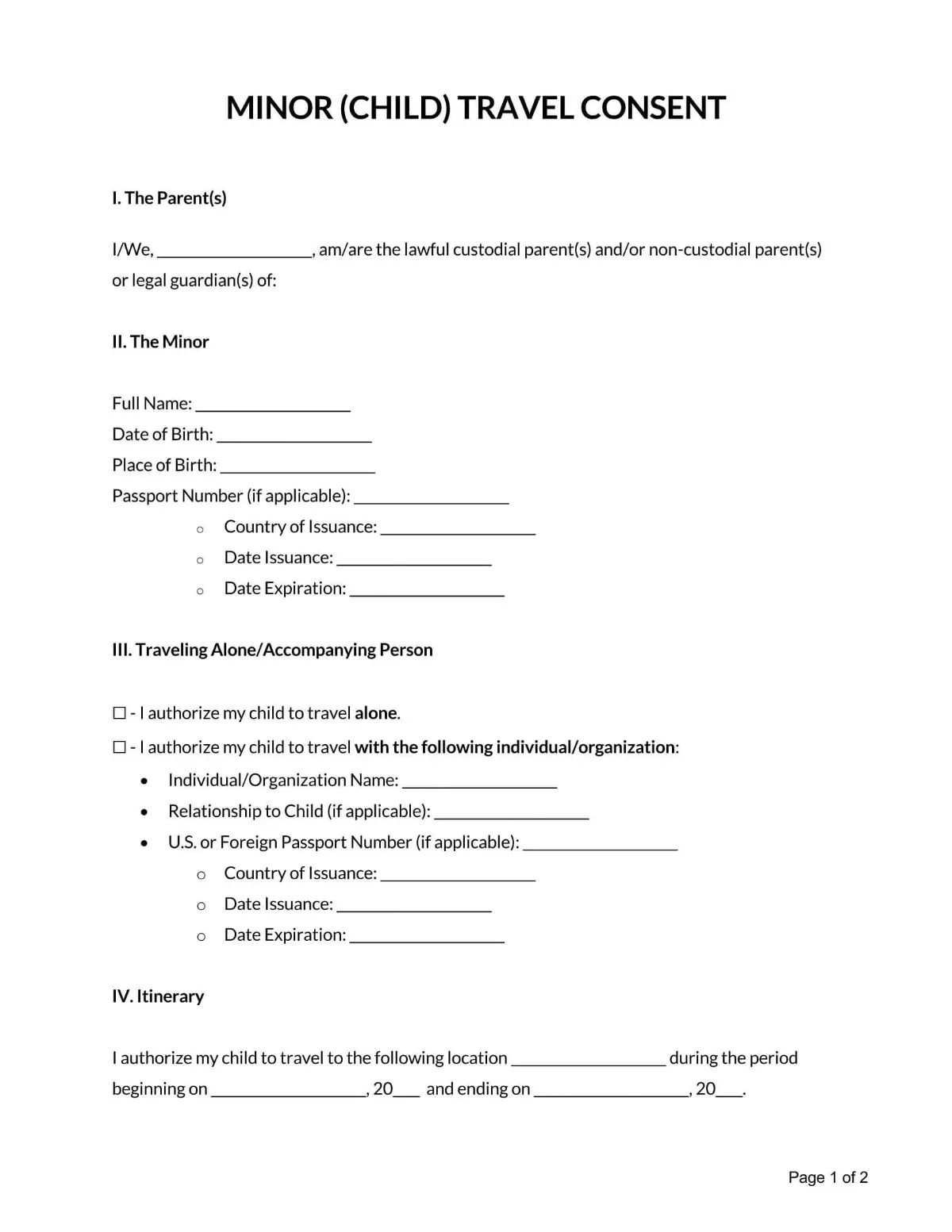
Whether it's a family trip to Tijuana, a cruise out of San Diego or a flight overseas, a child crossing a border without both parents may be asked for proof that the trip is approved. That proof is a travel consent letter, and having it notarized makes it far more credible.
When does a child need a travel consent letter?
According to USA.gov, a child may need a consent letter when traveling internationally:
- With only one parent or guardian. The parent who isn't traveling should sign the letter.
- With someone else, such as grandparents, relatives, friends or a school or sports group. Both parents should sign.
- Alone. Both parents should sign, and airlines will have their own unaccompanied-minor rules.
Border officers, airlines and cruise lines watch closely for possible child abduction, so they may ask for this letter even when the trip is completely normal.
Does it have to be notarized?
U.S. law doesn't require it, but USA.gov says a consent letter should preferably be in English and notarized. A notarized letter shows that the signature is genuine and that the parent signed willingly.
Some destination countries, airlines and cruise lines have stricter rules, so check with them before you travel.
Traveling to or from Mexico? Mexico has its own exit rules for children who are Mexican citizens or residents traveling without both parents. If that applies to your child, check with the Consulate General of Mexico in San Diego before the trip.
What to include in the letter
A clear consent letter usually includes:
- The child's information: full name, date of birth and passport number
- The traveling adult's information: full name and passport number, plus their relationship to the child
- The trip details: destination(s), travel dates, and flight or cruise details if you have them
- The parents' information: each non-traveling parent's full name, address and phone number
- A consent statement, for example: "I acknowledge that my child is traveling outside the country with [name of adult] with my permission."
- Signature and date from each non-traveling parent, signed in front of the notary
A notary can't write the letter for you or give legal advice about what it should say. Bring the letter completed but unsigned.
Extra documents that can help
- A copy of the non-traveling parent's ID
- The child's birth certificate, which shows the parents' names
- Custody papers, if one parent has sole custody
- A death certificate, if one parent has passed away
What if a parent is out of the country?
The parent can sign the letter in front of a notary where they are. If they're abroad, that's usually at a U.S. embassy or consulate. Some countries also require an apostille on the letter. See Apostille vs. Authentication to learn more.
Getting your letter notarized in San Diego
The parent signing needs a valid photo ID (see What ID Do I Need for a Notary in California?). We'll come to your home or office, even the night before a trip. We're available 24/7 by appointment across San Diego County.
This article is general information, not legal advice. Travel rules change, so confirm requirements with your airline, cruise line and the destination country before you travel.