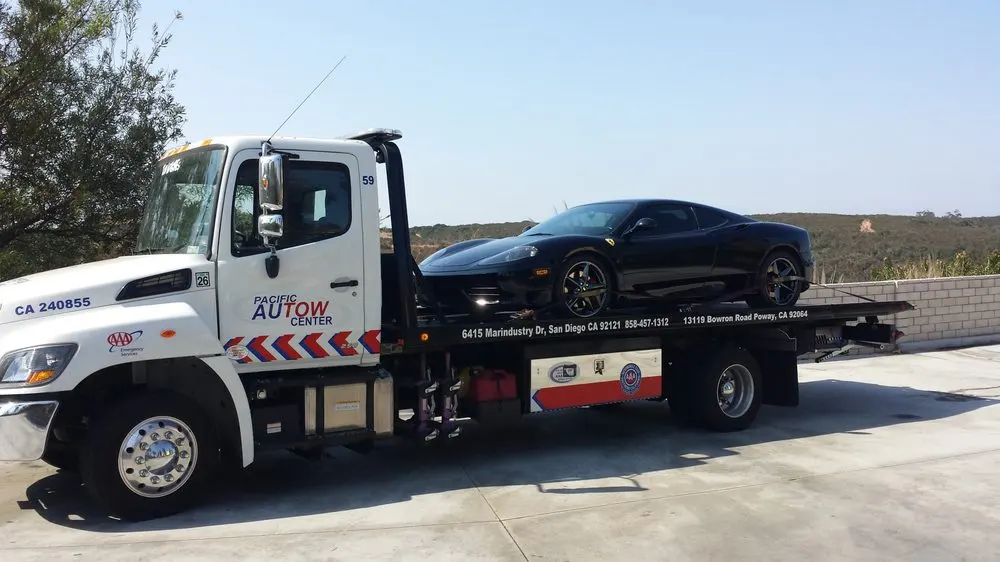
Your car was towed or impounded, and every day it sits in the impound lot, storage fees add up. If the registered owner can pick it up in person with valid ID, that's usually the simplest way. But often they can't. The car might be registered to a parent, a spouse or a business. The owner might be out of town, at work, in the hospital or in custody.
In that case, the tow yard will usually ask for a written authorization letter from the registered owner, and many tow yards and agencies want that letter notarized. Here's how it works in San Diego, and how to get it done fast, even at night.
Step 1: Find out where the car is and what the tow yard requires
For cars towed by the City of San Diego, search AutoReturn online or call 619-527-4392. If AutoReturn can't find it, call the SDPD non-emergency line at 619-531-2000. Have the plate number or VIN, the make and the model ready. It can take a few hours after the tow before full details show up.
If the car was towed from private property, like an apartment complex or a shopping center, it may not be a city tow. Check the signs posted where it was parked for the tow company's name and number.
Then call the tow yard and ask:
- Can someone other than the registered owner pick up the car?
- Do you need the authorization letter notarized, or is a signed letter enough?
- Do you have your own authorization form we should use?
- What are your release hours, and what forms of payment do you take?
Every tow yard and agency sets its own rules, so this one phone call saves you a wasted trip.
Step 2: Check for a police hold
If police impounded the car, for example after an arrest or for a 30-day hold, you may need a signed vehicle release from the police agency before the tow yard will let it go. Some agencies require the registered owner to appear in person for that release, during business hours. A notarized letter may not get around that, so ask the agency first.
What a vehicle release authorization letter should include
Requirements vary, but letters accepted by San Diego County agencies typically include:
- The registered owner's full name
- The name of the person authorized to pick up the car, who will need a valid driver's license
- The vehicle description: year, make, model, license plate number and VIN
- A statement authorizing that person to take custody of the vehicle
- The date and the registered owner's signature
- A copy of the registered owner's photo ID attached
When the tow yard wants it notarized, the registered owner signs the letter in front of a notary, who verifies their ID and notarizes the signature. The tow yard then knows the signature is real.
Getting it notarized tonight
Impounds don't happen on a schedule. That's why we're available 24/7 by appointment, including nights, weekends and holidays. We come to the registered owner wherever they are:
- At home or at work, anywhere in San Diego County
- In the hospital. See How to Get a Document Notarized in a Hospital.
- In jail or a detention facility. See our jail notary service.
The registered owner needs a valid, unexpired photo ID. See What ID Do I Need for a Notary in California? Don't sign anything before we arrive. It has to be signed in front of the notary.
No letter written yet? No problem. If the tow yard has its own authorization form, use that. If not, we bring a California jurat with an affiant statement. The registered owner writes the authorization on it in their own words, including the vehicle details and the name of the person picking up the car. Then they swear to it and sign in front of us. You don't need to type or print anything ahead of time.
A notary can't give legal advice or tell you what the tow yard will accept, so call the tow yard first and confirm what they need.
What the person picking up the car brings to the impound lot
- The original notarized authorization letter (many tow yards won't accept a copy)
- Their own valid driver's license
- A copy of the registered owner's ID
- Current registration and proof of insurance, if the tow yard asks for them
- The signed police release, if there was a police hold
- Payment for the towing and storage fees
Frequently asked questions
Does the authorization letter have to be notarized? It depends on the tow yard or agency. Some accept a signed letter with a copy of the owner's ID. Others require it notarized, especially for higher-value cars or when the owner isn't local. Call first and ask.
Do I need to write the letter before you arrive? No. If the tow yard doesn't have its own form, the registered owner can handwrite the authorization on our California jurat form during the appointment, then sign it under oath in front of us.
Can the registered owner sign it remotely? Not for a California notarization. California notaries can't currently perform remote online notarizations, so the owner has to sign in person in front of the notary. We come to them.
How fast can you come? Often the same night, depending on location and time. Call us with the owner's location and we'll give you an arrival time and price before we head out.
How much does it cost? It depends on the time of day and where we're going. Late-night and emergency visits can be around $200. We'll give you the exact price on the phone before we head out. See How Much Does a Mobile Notary Cost in San Diego? and our 24-hour mobile notary guide.
My car was towed and I think the tow was illegal. What can I do? For City of San Diego tows, the registered owner can request a post-storage hearing with SDPD Tow Administration. Ask the agency that ordered the tow how to request one.
This article is general information, not legal advice. Impound release rules vary by tow yard and agency and can change, so confirm current requirements with the tow yard and the impounding agency before you go.